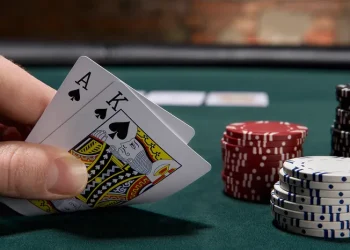


When beginners first learn Texas Holdem, they usually focus all their attention on card strength. They look down at a pair of kings or an ace-queen suited and feel a rush of excitement. Conversely, seeing a seven-two offsuit prompts an immediate fold. While card strength is undoubtedly a pillar of winning poker strategy, it is only a fraction of the equation. Professional players often argue that your cards are secondary to where you sit at the table.
In poker, position refers to the order in which players act during a betting round. The closer you sit to the dealer button, the later you act in the hand. This simple mechanical structure completely dictates the flow of information, risk management, and profitability. Understanding the art of position is what separates recreational players from consistent long-term winners.
The Power of Asymmetric Information
Poker is fundamentally a game of incomplete information. Unlike chess, where both players can see the entire board at all times, poker forces you to make decisions based on probabilities and clues. Acting last gives you a massive information advantage because you get to see how every other player reacts before you have to invest a single chip.
When you sit in late position, you observe whether your opponents check, call, raise, or fold. A check often signals weakness, while a swift raise signals strength. Even the amount of time an opponent takes to make a decision provides a window into their thought process. When it is finally your turn to act, you process all these data points to make a highly informed decision.
Conversely, acting first means you are flying completely blind. You must guess how the remaining players at the table will react. If you bet with a mediocre hand, you risk getting raised by someone behind you. If you check, you might allow opponents to see a free card and improve their hands. The systemic disadvantage of early action explains why poker win rates scale dramatically based on seat location.
Breaking Down the Poker Table Zones
To weaponize position, you must first understand the distinct zones of a standard nine-handed or ten-handed poker table. The table rotates clockwise, shifting the specific seats after every single hand.
Early Position
Early position includes the seats that must act first in the preflop betting round. This zone consists of the Small Blind, the Big Blind, and Under the Gun.
The Under the Gun seat is widely considered the toughest spot at the table. If you sit here, you are the absolute first person to act preflop, with the entire table waiting to react behind you. Because the threat of a better hand or a re-raise is incredibly high, your starting card requirements must be exceptionally strict.
The blinds represent a unique positional paradox. Preflop, they act last, which gives them a minor advantage. However, on every subsequent betting round, the Small Blind and Big Blind must act first. This means you will spend the vast majority of the hand out of position, leaking chips if you play too loose.
Middle Position
Middle position seats act as a bridge between the early and late zones. Often referred to as the Lojack and Hijack, players in these seats can open up their starting hand selection slightly.
If the players in early position fold, a middle position player effectively becomes the new early position act, but with fewer opponents left to beat. It is a zone of transition where you can exploit tight players sitting early, but you must still remain cautious of the aggressive players sitting to your left.
Late Position
Late position is the gold mine of the poker table. This zone comprises the Cutoff and the Button.
The Button is the absolute best seat in the game. On the flop, turn, and river, the player on the Button always acts last. They control the pace of the hand, dictate the size of the pot, and can execute bluffs with maximum efficiency. The Cutoff sits directly to the right of the Button and acts as a secondary powerhouse, often looking to steal the blinds before the Button has a chance to react.
How Position Dictates Starting Hand Selection
Your seat location should directly dictate the cards you choose to play. A hand that is an automatic fold in early position can become a premium raising hand when you sit on the Button.
-
Tight Ranges in Early Position: When sitting Under the Gun, you should only play premium hands. This includes high pocket pairs like pocket aces, kings, queens, or jacks, alongside elite untied cards like ace-king. Playing speculative hands like suited connectors or weak aces from this spot is a mathematical recipe for disaster.
-
Expanding Choices in Middle Position: As the field narrows, you can begin introducing medium pocket pairs like pocket eights, and strong broadway cards like king-queen or queen-jack suited.
-
Wide and Aggressive Ranges in Late Position: On the Button, the world opens up. You can profitably raise with small pocket pairs, suited connectors, gappers, and a wide variety of aces. The goal here is to take control of the pot and use your post-flop positional advantage to win the hand even if you miss the board completely.
The Mathematical Edge of Acting Last
The strategic benefits of late position translate directly into mathematical advantages that alter your bottom line. There are three core ways this manifests during live play.
Pot Control
When you act last, you decide exactly how big the pot gets. If you hold a decent but vulnerable hand and your opponent checks to you, you can simply check behind to see the next card for free. If you want to build a massive pot because you hit a monster hand, you can choose to bet big. An out-of-position player loses this luxury; they must guess whether to bet into you or check and risk letting you check behind.
Realizing Equity
Equity is your mathematical share of the pot based on your chances of winning at showdown. Realizing equity is significantly easier when you act last. If the action checks around to you on the flop, you can take a free card on the turn to hit your draw. If you are out of position, an aggressive opponent can bet you off your draw before you ever get to see the next card, forcing you to fold away your potential equity.
The Bluffs that Work
Bluffing from early position requires immense courage and a massive amount of chips because you are representing extreme strength to a crowded field. Bluffing from late position is far more surgical. If the flop comes down and multiple opponents check to you, they have collectively broadcasted weakness. A standard continuation bet from the Button will frequently take down the pot right then and there, regardless of what actual cards you hold.
Practical Adjustments for Every Session
To immediately implement the art of position in your next poker game, focus on two foundational adjustments.
First, track your voluntary investment of chips based on your seat. You should be folding far more often in the blinds and early seats than you do in the cutoff and button seats. If your play style looks identical from every chair, you are actively giving away money.
Second, target opponents who ignore position. Look for players who love to call raises out of the blinds with weak, unsuited cards. When you spot these players, try to enter pots against them when you have the positional advantage. By forcing them to play post-flop while acting first, you turn the natural mechanics of the game into a relentless profit engine.
Frequently Asked Questions
What does it mean to be in position versus out of position?
Being in position means you are the last person, or among the last people, to act in a betting round. Being out of position means you must act first or early in the betting round, forcing you to make decisions before seeing what your opponents intend to do.
Why is the Cutoff seat given that specific name?
The seat to the direct right of the dealer button is called the Cutoff because a raise from this location effectively cuts off the Button’s ability to steal the blinds. It allows the player to hijack the traditional advantage of the Button by acting aggressively before the dealer can.
Should I ever call a raise from the Small Blind?
Calling a raise from the Small Blind is generally discouraged because it guarantees you will play the entire rest of the hand completely out of position against every other player. If a hand is strong enough to play from the Small Blind, it is usually better to re-raise to thin the field or simply fold weak speculative hands.
How does position strategy change when playing short-handed tables?
As the number of players at a table decreases, early positions disappear. In a six-handed game, the first person to act is effectively in middle position. This requires you to immediately open up your starting hand requirements and play a much more aggressive, wide range of cards from the start.
Can a player maintain a post-flop positional advantage over the Button?
No, the dealer button retains the absolute post-flop positional advantage for the entire hand. No matter what happens on the flop, turn, or river, the player sitting on the physical button will always act last in every single betting round.
Is card strength completely irrelevant when you have a perfect position?
Card strength is never completely irrelevant. While a great position allows you to win many pots with bluffs and smart aggression, holding strong cards provides a critical safety net. The ideal scenario is combining high-equity cards with a late position to maximize value.
What is a continuation bet and how does position affect it?
A continuation bet occurs when the player who made the last aggressive move preflop chooses to bet again on the flop. Making a continuation bet while in position is highly effective because you can gauge the weakness of your opponents based on their checks before deciding to fire the bet.