
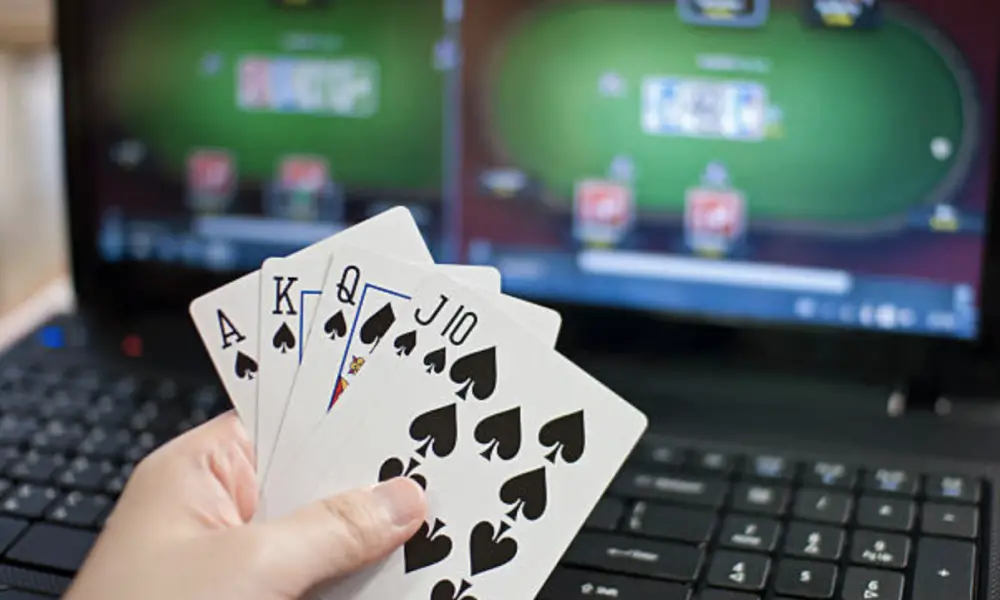
The digital cardroom can be a brutal environment. You sit down at a virtual table, pick up pocket aces, build a massive pot preflop, and watch in horror as an opponent calls a huge bet with a weak drawing hand and hits a miraculous straight on the river. When these highly improbable sequences happen multiple times in a single session, it is easy to let frustration take over. In forums, chat boxes, and home games across the globe, one question echoes louder than almost any other: Is online poker rigged?
The short answer is no, it is not. The belief that major, regulated online poker platforms manipulate dealing algorithms to generate specific outcomes or favor certain players is one of the most persistent myths on the internet. However, dispelling this myth requires looking past raw emotion and examining the actual technology, corporate economics, and human psychology that govern the modern digital poker ecosystem.
The Mechanics of Fairness: How Random Number Generators Work
At the center of any online poker site sits a piece of software known as a Random Number Generator, or RNG. This technology replaces the physical shuffling of a deck of cards by a human dealer. For a digital game to be fair, the software shuffle must mimic the complete unpredictability of a real, physical card deck.
Modern online poker platforms utilize sophisticated algorithms alongside hardware-based entropy sources to achieve true randomness.
-
Algorithmic Seeding: An RNG requires an initial numeric input, known as a seed, to begin its complex calculations. To prevent anyone from guessing or predicting the sequence, platforms draw seeds from chaotic physical processes. These can include microscopic atmospheric noise, thermal fluctuations in computer hardware, or even the precise millisecond timing of player mouse movements and keystrokes.
-
Constant Shuffling: Unlike a physical deck that is shuffled once before the deal, many advanced online poker RNGs continuously shuffle the remaining virtual cards until the exact millisecond a card is requested by the game engine. This makes it mathematically impossible for a player or a hacker to predict the next card, as the outcome depends entirely on the exact microsecond the action occurs.
-
Strict Testing Regimens: Before a reputable poker site can deal a single hand to the public, its RNG must undergo rigorous evaluation by independent, accredited testing laboratories. Regulatory bodies require these algorithms to pass millions of statistical tests to prove the distribution of cards matches pure mathematical probability over a vast sample size.
The Economics of Online Poker: Why Regulated Sites Won’t Cheat
Beyond the cryptographic safeguards, the most compelling argument against the rigged software theory lies in basic corporate economics. Online poker platforms are not casinos where players bet against the house. In games like blackjack or roulette, the house wins when the player loses, creating an inherent conflict of interest. Poker operates on a fundamentally different financial model known as the rake.
The rake is a small percentage of the pot collected by the platform for hosting the game, usually capped at a few dollars per hand. Alternatively, for tournaments, players pay a fixed entry fee. This means the poker site makes its money regardless of whether a world champion wins the hand or a complete novice hits a lucky river card.
Rigging a game to favor specific players yields no financial benefit to a legitimate operator. In contrast, the financial penalty for getting caught manipulating the software is the absolute destruction of the business. Modern online poker brands are massive corporations, and many are publicly traded entities answerable to shareholders, board members, and government regulators. Risking a multi-million dollar operation, gaming licenses, and corporate freedom to artificially manipulate virtual cards makes zero logical or financial sense.
Psychological Traps: Confirmation Bias and the Illusion of Control
If the math is sound and the business model aligns with fairness, why do so many players remain convinced the games are dishonest? The answer lies in the human brain, which is naturally hardwired to seek patterns and struggle with the realities of large-scale probability.
The speed of digital play is a major catalyst for suspicion. A live poker game at a brick-and-mortar casino typically moves at a pace of roughly twenty-five to thirty hands per hour. Online, a single table can comfortably clear seventy to one hundred hands per hour. Furthermore, digital players frequently play multiple tables simultaneously. This means an online player can easily see four to five times as many hands in a single evening as a live player sees in an entire week. Consequently, they experience rare statistical anomalies and devastating bad beats at an accelerated rate, creating the false impression that online card play is uniquely cursed.
Confirmation bias also plays a major role. Human memory is naturally selective. Players rarely commit to memory the hundreds of times their premium hands hold up as expected or the times they hit their own lucky draws. Instead, the human brain hyper-focuses on painful losses, especially when large amounts of chips are at stake. When a player suffers a string of bad beats, confirmation bias leads them to ignore the statistical reality and conclude the system is broken.
Finally, the lack of physical contact creates an illusion of control issue. In a live cardroom, you can physically touch the cards, watch the dealer shuffle, and cut the deck. This physical interaction provides a sense of control over the environment. When that process shifts to a glowing computer screen or a smartphone, that physical connection vanishes. The lack of visual, tactile control breeds suspicion, transforming standard statistical variance into a conspiracy theory.
The True Threats: Real Security Issues vs. Software Rigging
While the dealing algorithms are not rigged, stating that online poker is entirely free from deception would be inaccurate. However, the actual dangers do not come from the platforms themselves; they come from malicious actors trying to exploit the system. Understanding these real vulnerabilities helps players protect themselves without falling for false myths.
-
Collusion and Cheating Rings: The most common form of security breach occurs when two or more players at the same table communicate via external channels to share information about their hole cards. This artificial edge allows them to trap unsuspecting opponents.
-
Automated Poker Bots: Some bad actors deploy sophisticated software programs designed to play optimal poker strategies without human intervention. These bots do not manipulate the cards dealt, but they can grind out small profits over thousands of hands by playing flawlessly against tired or emotional human opponents.
-
Real-Time Assistance Tools: Known within the industry as RTA, these programs advise players on the mathematically perfect decision while a hand is actively in progress. Using RTA violates the terms of service of every major platform, as it destroys the peer-to-peer integrity of the game.
Top-tier online poker sites invest heavily in security departments to combat these threats. They deploy advanced artificial intelligence systems to monitor player behavioral patterns, mouse movements, betting metrics, and win rates. When anomalies are discovered, accounts are permanently frozen, funds are confiscated, and balances are returned to affected players.
How to Verify Platform Integrity
If you want to ensure your funds and gameplay are safe, you must learn how to differentiate between high-integrity platforms and high-risk operations. Safe platforms will always feature visible compliance badges from major regulatory agencies and independent auditing companies.
Look for sites regulated by strict jurisdictions such as the Malta Gaming Authority, the United Kingdom Gambling Commission, or individual state gaming control boards in the United States. Additionally, reputable platforms openly publish certification documents from auditing firms like iTech Labs or eCOGRA, validating that their software remains secure, transparent, and uncompromised.
Conclusion
The myth that online poker is rigged is built on a foundation of emotional frustration, accelerated variance, and a misunderstanding of digital security. When you peel back the layers of bad beats and look at the underlying reality, you find highly regulated systems protected by cutting-edge cryptography and audited by independent experts. The real challenge of online poker is not beating a rigged algorithm; it is mastering your own emotions and outplaying the human opponents sitting across the virtual felt.
Frequently Asked Questions
Does online poker software intentionally create more action hands to increase the size of the rake?
No, software does not generate action hands like full houses versus flushes to increase the rake. Doing so would skew the statistical distribution of cards, which would cause the platform to fail its mandatory independent audits. Furthermore, rakes are capped at a specific maximum dollar amount per hand, meaning the platform gains no extra benefit from creating massive, dramatic pots.
Why do new players or bad players seem to win a disproportionate number of bad beats online?
Bad players suffer from and inflict more bad beats simply because they play too many weak hands and call bets when the math says they should fold. Because they stay in pots with low equity, they will occasionally hit their miraculous draws. This is a product of basic probability, not a software bias designed to protect weaker players.
Can a software developer or insider at an online poker company see my cards in real time?
Historically, early unregulated sites suffered from insider cheating scandals where rogue employees used superuser accounts to view hole cards. Today, modern regulated platforms use strict security protocols that encrypt data packets. No low-level employee can access real-time hole card data, and system access is monitored by severe internal controls and regulatory oversight.
How do tracking software and heads-up displays affect the fairness of online poker?
Heads-up displays do not change the cards dealt or alter the software. They simply compile publicly available hand history data that the player observed while sitting at the table. While these tools help players spot mathematical trends in an opponent’s strategy, many modern sites have banned them completely to level the playing field for recreational players.
What happens to the money if an online poker site catches a cheater or a bot?
When a security team identifies a bot or a colluding account, the platform immediately freezes the account and confiscates the remaining funds. These funds do not go into the pocket of the poker site. Instead, the platform uses a redistribution formula to return the confiscated money directly to the players who were systematically cheated by that specific account.
Are unregulated or offshore poker sites using the same security standards as regulated ones?
Unregulated or offshore sites operate outside the legal framework of major governing bodies, meaning they lack the same level of strict, mandatory oversight. While many offshore sites run fair RNG software to maintain a user base, players face a much higher risk regarding fund safety, slow payouts, and inadequate protection against bots and collusion.
How does the implementation of artificial intelligence change the battle against online poker bots?
Artificial intelligence has become the primary defense system for online poker platforms. Security teams train machine learning models to analyze millions of hand histories, looking for robotic play patterns, identical decision response times, and perfect mathematical execution. This allows platforms to catch and ban modern bots faster than ever before.