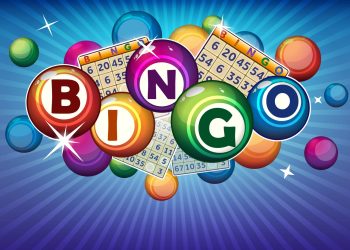

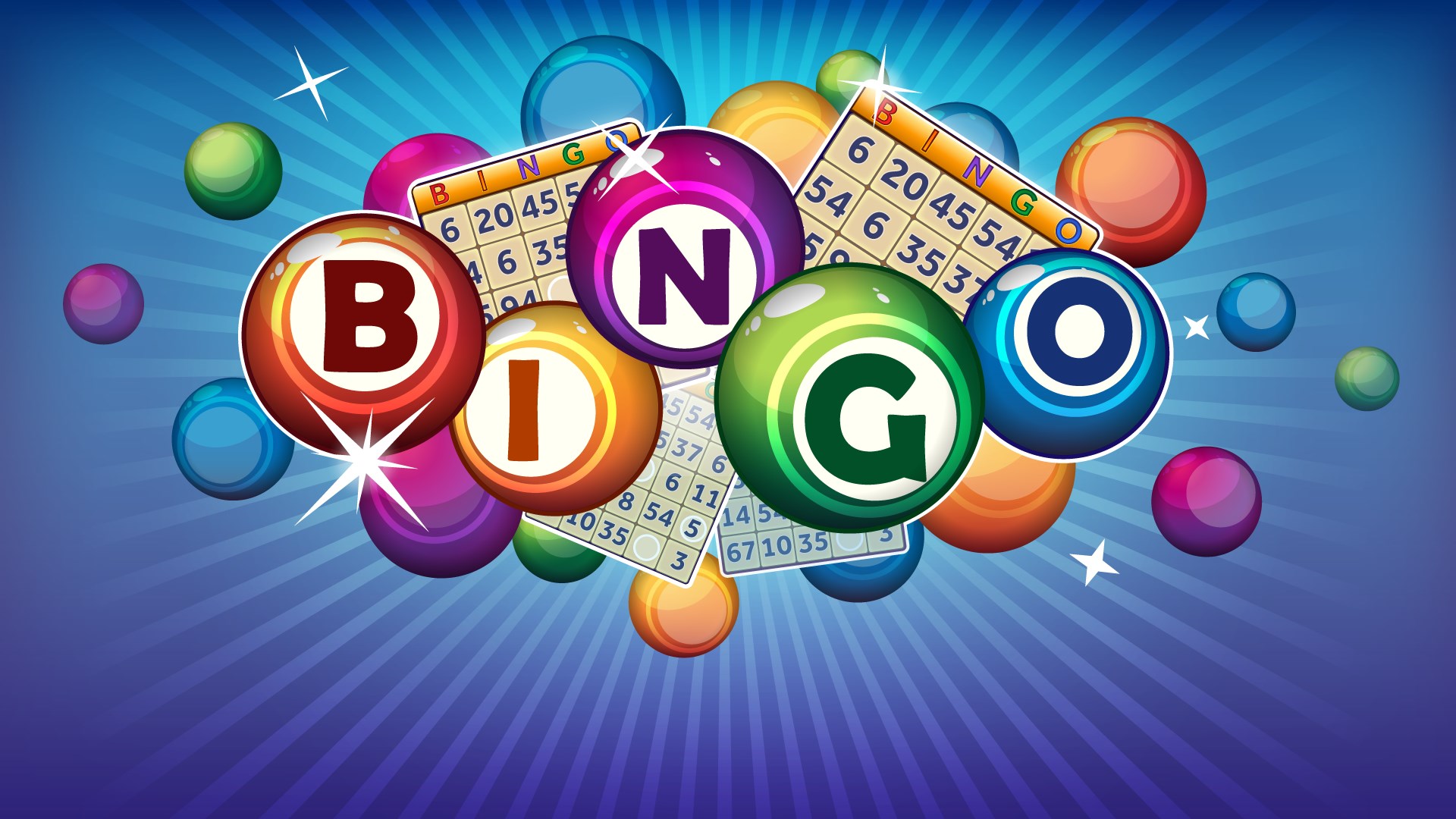
For generations, bingo has held a distinct reputation in the gaming world. To the casual observer, it appears to be the ultimate game of chance. A room full of players sitting at tables, daubers in hand, waiting for a caller to draw a random numbered ball from a cage. It looks like a pastime driven entirely by the whims of lady luck, requiring no strategy, no mental agility, and no skill.
This perception has relegated bingo to the sidelines of serious gaming, often viewed merely as a social activity for community centers or retirement homes. However, beneath the surface of this seemingly simple game lies a complex interplay of probability, mathematics, and psychological endurance. The idea that bingo is purely about luck is one of the greatest misconceptions in modern gaming. It is time to dismantle the myths, look at the actual mechanics of the game, and explore why bingo involves far more strategy than most people realize.
The Illusion of Absolute Randomness
At its core, every game of bingo relies on a random number generator, whether it is a physical cage filled with tumbling balls or a digital algorithm in an online casino. Because the numbers drawn are genuinely random, critics argue that player agency is non-existent. This is where the misunderstanding begins. While you cannot influence which number is called next, you can entirely control how you position yourself relative to the mathematical laws of probability.
Probability is not just about randomness; it is about predictability over time. In a standard 75-ball bingo game, each number has an equal chance of being drawn at the very beginning. However, as the game progresses, the landscape of probability shifts dramatically. Players who understand these shifts can make informed decisions before the first number is ever called.
Mathematical Strategies: Granville and Tippett
Serious bingo players do not just buy a random assortment of cards and hope for the best. They look at mathematical theories developed specifically to gain an edge in the game. Two primary systems have stood the test of time: Granville’s Theory and Tippett’s Theory.
Granville’s Probability Strategy
Joseph E. Granville was a financial writer and mathematician who noticed distinct patterns in lottery and bingo drawings. He deduced that in a long-term game of bingo, the drawn numbers will eventually achieve a state of balance. According to Granville, a player should select cards that exhibit a specific set of characteristics to maximize their odds:
-
An equal distribution of high numbers and low numbers.
-
An equal distribution of odd numbers and even numbers.
-
An equal number of cards ending in each digit from 0 through 9.
By choosing cards that match these criteria, you align your card structure with the natural mathematical distribution of a randomized drawing. This minimizes the risk of holding a card that is heavily skewed toward a sequence of numbers that may not appear until it is too late.
Tippett’s Statistical Theory
British statistician L.H.C. Tippett developed a different approach based on the length of the game. Tippett suggested that in shorter games of bingo, the numbers drawn are more likely to cluster near the extremes, meaning closer to 1 and 75. Conversely, in longer games, such as those requiring a complex pattern or a full card blackout, the drawn numbers will naturally gravitate toward the median number, which is 38.
Strategic players apply Tippett’s theory by analyzing the game type before playing:
-
For short games: Choose cards with a higher concentration of numbers close to 1 and 75.
-
For long games: Choose cards with a higher concentration of numbers centered around the mid-30s and 40s.
The Mathematics of Card Selection
Aside from applying specific theories, the sheer volume of cards you play acts as a direct lever on your mathematical probability of winning. If a game has 100 total cards in play, and you own 1 card, your statistical chance of winning is exactly 1%. If you purchase 10 cards, your chance jumps to 10%.
While this seems obvious, the skill lies in managing the relationship between the cost of the cards, the potential payout, and your own cognitive limits. Buying more cards increases your probability of winning, but it also increases your financial risk. A skilled player calculates the value of the prize pool relative to the number of competitors to determine the optimal number of cards to purchase.
The Cognitive Demand and Skill of the Live Game
Online bingo often offers auto-daub features that mark the cards for you, which does diminish the physical skill required. However, in a live bingo hall, the game becomes a high-speed test of cognitive endurance, pattern recognition, and manual dexterity.
Split-Second Processing
A live caller moves quickly, often announcing a new number every few seconds. If you are playing 12, 18, or 24 paper cards simultaneously, you must scan all of those cards, locate the number, and mark it accurately before the next number is announced. Missing a single number can ruin a potential winning pattern. This requires intense focus and a highly developed visual tracking ability.
Pattern Recognition
Not all bingo games are a race to fill a straight line. Many games require complex patterns, such as a diamond, an airplane, an outside frame, or a postage stamp. A player must constantly hold the mental image of the required pattern in their mind while scanning multiple cards at rapid speed. The ability to manage this high cognitive load without making mistakes is a learned skill that separates novices from veterans.
Bankroll Management and Table Selection
Professional poker players spend a significant amount of time selecting the right tables to maximize their profits. Successful bingo players operate in the exact same manner. Game selection is a critical component of bingo strategy that has nothing to do with luck.
The Crowd Size Dilemma
Unlike games like blackjack, where the house acts as the opponent, bingo is a peer-to-peer game. The prize pool is often fixed or determined by the total ticket sales.
-
High Attendance Games: A crowded room means a larger prize pool, but your individual odds of winning drop significantly because you are competing against thousands of cards.
-
Low Attendance Games: A sparse room means a smaller prize pool, but your statistical odds of winning skyrocket.
Strategic players often seek out mid-week games, early morning sessions, or poor-weather days to play. By reducing the number of competing cards in the room, they artificially boost their win probability.
Myth vs. Reality: Bounding the Misconceptions
To fully appreciate the depth of bingo, it is helpful to look directly at the common myths that shroud the game and contrast them with reality.
-
Myth: Buying more cards guarantees a profit.
Reality: Buying more cards increases your odds of winning a specific round, but if the cost of the cards exceeds the value of the prize, you are losing money overall. Strategic card purchasing requires calculating the return on investment based on player turnout.
-
Myth: Certain numbers are inherently lucky or due to hit.
Reality: Each draw is an independent statistical event. A number that has not been called in three games is not due to appear. Strategic players rely on overall card distribution rather than hunting for specific lucky numbers.
-
Myth: Online bingo is rigged compared to live bingo.
Reality: Certified online bingo platforms use regulated Random Number Generators that mimic the exact mathematical variance of a physical cage. The strategies of card volume and game selection apply equally to both mediums.
The Verdict on Bingo
Bingo will always contain an element of luck because you cannot predict the sequence of the draw. However, labeling it a game of pure luck ignores the mathematical frameworks, cognitive skills, and strategic game selection that top-tier players utilize. By choosing the right cards based on statistical distribution, managing the volume of cards against the competition, and maintaining the sharp focus required to track multiple patterns simultaneously, bingo transforms from a passive game of chance into an active game of probability management.
Frequently Asked Questions
Does the seat location in a live bingo hall impact win rates?
Seat location has no impact on the randomness of the numbers called, but it does impact player performance. Sitting closer to the caller or the digital display screens can reduce acoustic errors and visual strain, allowing players with multiple cards to mark their numbers more accurately and avoid missing a call.
How does the variance in 75-ball versus 90-ball bingo affect strategy?
75-ball bingo is played on a five-by-five grid and typically utilizes complex patterns, making Granville’s theories regarding card balance highly effective. 90-ball bingo uses a three-by-nine grid with fewer numbers per row, focusing primarily on horizontal lines and full houses, which alters the speed of the game and favors players who manage higher volumes of tickets.
Can card color or manufacturing batch influence the outcome of a game?
Modern bingo paper is manufactured under strict regulations to ensure an even distribution of numbers across batches. The color of the card is purely for administrative tracking by the venue to ensure players are using the correct sheets for the specific game in progress, and holds no statistical weight.
Is it mathematically advantageous to change cards between games if you are losing?
Statistically, changing your card does not reset your luck or alter the probability of the upcoming game. Every new game is an independent event with a fresh set of probabilities. Changing a card is only useful if your current card violates the principles of balanced number distribution or if you are switching between short and long game formats.
Do automated electronic dauber units eliminate the skill element of live bingo?
Electronic dauber units remove the physical limitation of scanning paper cards, allowing players to track hundreds of cards simultaneously. While this removes the manual dexterity requirement, it shifts the skill focus entirely to bankroll management, mathematical volume calculation, and selecting the optimal prize-to-competitor ratio.
How do modern online bingo chat games affect overall player strategy?
Chat games are side contests run by moderators during online bingo sessions. Engaging in these games requires players to split their attention to answer trivia or spot patterns in the chat window while the main game runs. The strategy here involves capitalizing on free bonus funds or tickets offered in the chat, which increases your overall playing capital without adding financial risk.